Writen by
nguyen hoang khai
nguyen hoang khai
Self-hosting means running and controlling your own environment for websites, applications, chatbots, data, email, or workflows instead of relying entirely on third-party SaaS platforms. Businesses usually start considering it when they need stronger data control, deeper system integration, more predictable long-term cost, and less dependence on a single vendor.
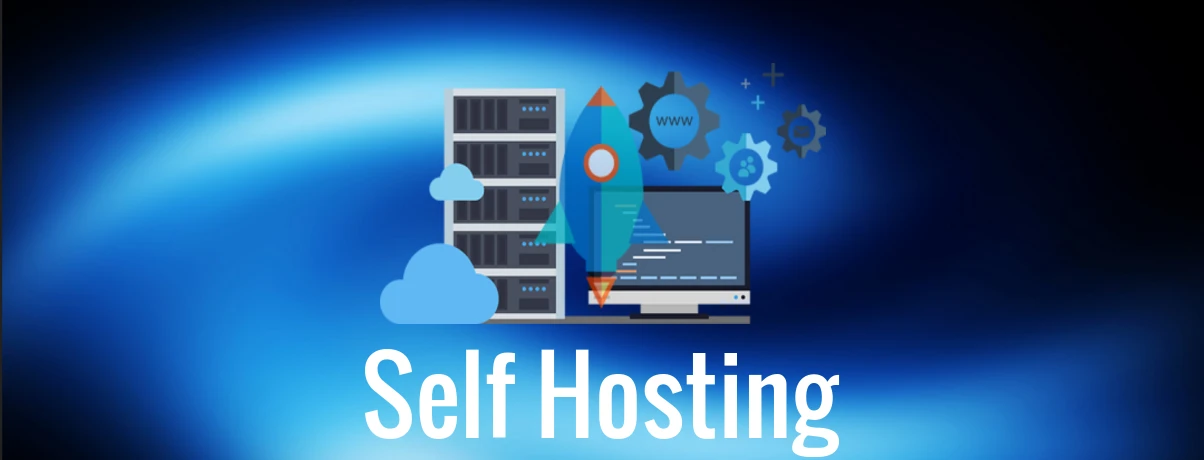
In practical terms, self-hosting means a business decides where its system runs, how it is configured, who can access it, how data is stored and backed up, and how tools connect with one another.
It does not always mean buying physical servers and keeping them in the office. A self-hosted setup can run on a VPS, a dedicated server, a private cloud, or a hybrid model. What matters is control over the architecture, the data, the permissions, and the operating logic.
Most teams do not look at self-hosting on day one. The need usually appears after they have adopted multiple external tools and begin to feel the downside: scattered data, growing monthly subscription costs, integration limits, and weak visibility into who can access what.
This is not only a large-enterprise issue. Growing teams also run into it when their website, chatbot, CRM, email, and automation workflows need to work as one operational system rather than as disconnected apps.
When customer data, internal documents, conversation history, and operational logs are spread across too many outside platforms, it becomes harder to understand where critical information lives, who has access to it, and how it moves. Self-hosting gives businesses more control over storage, permissions, backup, and auditability.
SaaS platforms are often fast to start with, but their limits become more visible when a business wants to connect its website, forms, chatbot, CRM, email, reporting, and internal workflows more deeply. Self-hosting usually gives teams more room to design a system around real operating needs instead of around the predefined boundaries of separate tools.
SaaS is often attractive early on because it reduces setup effort. But as the number of users, features, integrations, and data volume grows, recurring subscription costs can become harder to control. Self-hosting is not automatically cheaper, yet it can offer a clearer and more controllable cost structure when the business knows what it actually needs.
When too much of the business relies on one external platform, pricing changes, policy changes, feature restrictions, or provider-side incidents can have a wider impact. Owning more of your infrastructure does not remove risk, but it can reduce how dependent you are on a single vendor’s roadmap and operating model.
No. Self-hosting makes the most sense when a business genuinely needs tighter control over data, security, integrations, or long-term operating economics. If the team is still small, the workflow is simple, and speed is the top priority, SaaS may still be the better choice for the current stage.
A better question is not whether everything should be self-hosted. The better question is which parts of the stack need stronger control and which parts should stay outsourced for speed and simplicity.
If you control the infrastructure, you also own the discipline around backup and recovery. Backup is not just about having copies of data. It is about knowing how quickly you can recover, how much data you could lose, and whether recovery has been tested regularly.
Self-hosting only creates value when access is managed clearly. Who can view, edit, deploy, or approve changes should be defined early, and system activity should be logged in a way that supports review and accountability.
Owning infrastructure means patching the operating system, applications, plugins, firewalls, and supporting components cannot be treated as an afterthought. Delayed patching is one of the most common operational risks.
Many teams think about self-hosting as a control decision but forget observability. Without monitoring for uptime, capacity, service health, and unusual behavior, businesses often discover problems only after customers are already affected.
Self-hosting is not just a technology choice. It is an operating model. Someone has to own the ongoing work of monitoring, updating, reviewing security, and responding to incidents, even when the initial deployment is supported by a partner.
What is self-hosting? It is a way for a business to regain control over its infrastructure, data, and operating logic. But it only creates value when the level of control matches the team’s ability to govern and operate it well.
In many cases, a lean infrastructure that fits real needs and stays easy to control works better than either extreme: depending on too many disconnected SaaS tools or taking on an oversized private stack too early.
No. A business can self-host on a VPS, dedicated server, private cloud, or hybrid setup as long as it retains meaningful control over the system and the data.
No. It can be more cost-effective in some long-term scenarios, but SaaS may still be the better economic choice for smaller and simpler operations.
Not necessarily. Many businesses should start with a leaner setup and self-host only the parts that truly require tighter control or deeper integration.
Common starting points include websites, chatbots, internal databases, workflow automation, or systems that require stricter access control.